 090003 25483
 Yashoda Hospitals Hitec City Hyderabad, Kothaguda, Telangana 500084
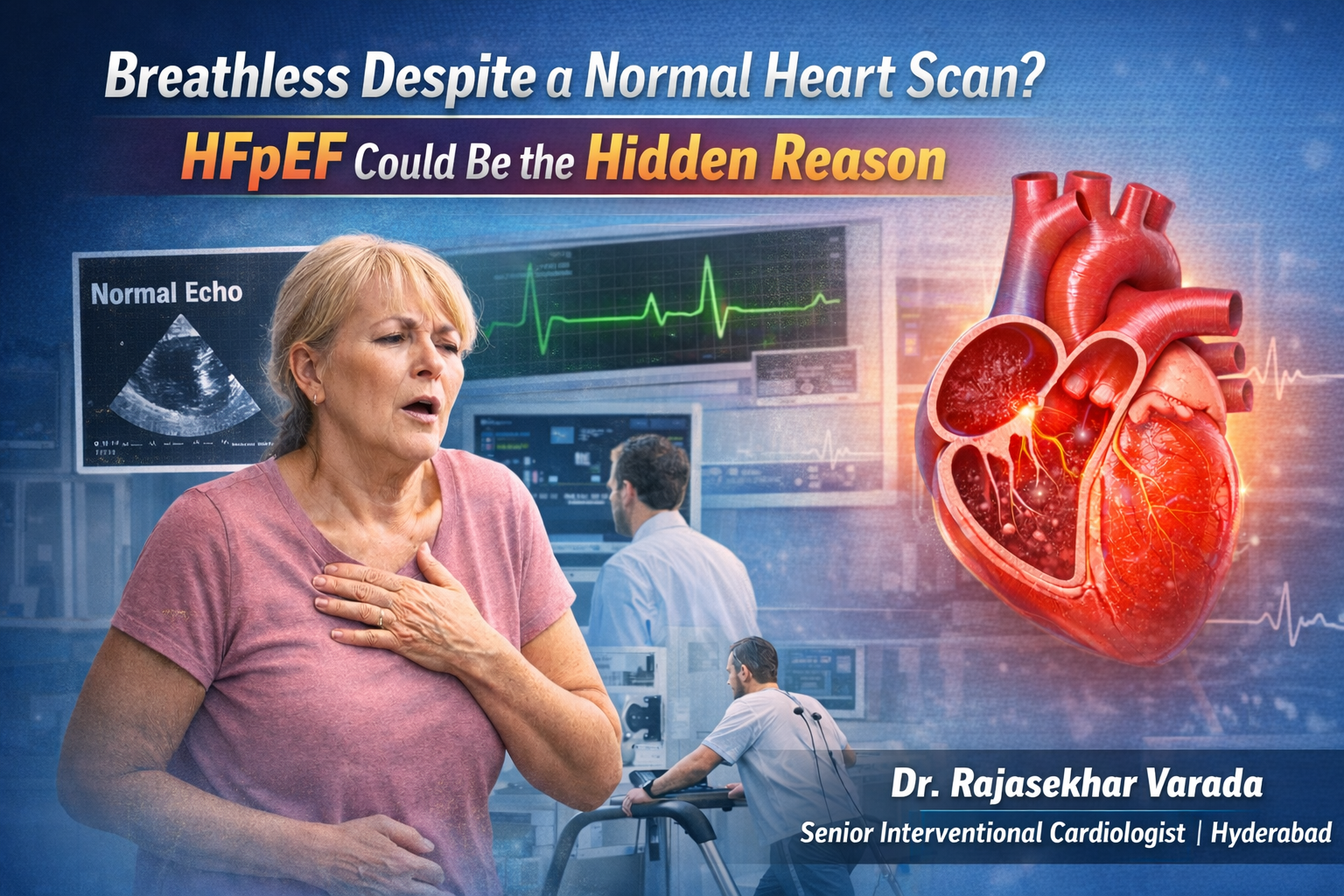
Many patients walk into a cardiology clinic with the same concern:
“Doctor, my echocardiogram is normal, my ECG is normal — then why do I feel breathless, tired, and unable to do my daily activities?”
If this sounds familiar, you are not alone.
One often-overlooked condition explains this puzzling situation: Heart Failure with Preserved Ejection Fraction (HFpEF). It is one of the most common — yet most underdiagnosed — causes of unexplained breathlessness, especially in middle-aged and elderly patients.
This blog explains HFpEF in simple terms, why routine heart scans can miss it, and when you should seek expert care.
What Does “Breathlessness with a Normal Heart Scan” Really Mean?
When patients undergo a heart evaluation, the most common tests include:
-
ECG
-
Echocardiogram (2D Echo)
-
Stress test or treadmill test
If these reports are labelled “normal,” patients are often reassured that the heart is fine. However, these tests primarily assess:
-
Heart structure
-
Pumping strength (ejection fraction)
-
Major rhythm abnormalities
They do not always evaluate how well the heart relaxes and fills, which is where HFpEF hides.
Understanding HFpEF: Heart Failure Without Weak Pumping
What is HFpEF?
HFpEF stands for Heart Failure with Preserved Ejection Fraction.
In this condition:
-
The heart’s pumping power (ejection fraction) is normal
-
The problem lies in poor relaxation and stiffness of the heart muscle
-
The heart cannot fill properly, especially during exertion
As a result, blood backs up into the lungs, causing:
-
Breathlessness
-
Fatigue
-
Reduced exercise tolerance
Even though the heart looks “normal” on routine scans.
Why HFpEF Is Commonly Missed
HFpEF is frequently underdiagnosed because:
-
Ejection fraction remains normal, misleading both patients and non-specialists
-
Symptoms are often attributed to:
-
Aging
-
Obesity
-
Anxiety
-
Deconditioning
-
-
Many patients have intermittent symptoms, worse on exertion
-
Diagnosis requires:
-
Detailed Doppler echo analysis
-
Clinical correlation
-
Sometimes advanced testing
-
This is why expert cardiology evaluation is crucial.
Common Symptoms of HFpEF
HFpEF symptoms can be subtle initially and worsen over time:
-
Breathlessness on walking or climbing stairs
-
Fatigue even with mild activity
-
Swelling of feet or ankles
-
Night-time breathlessness
-
Reduced exercise capacity
-
Frequent hospital visits for “heart failure” despite normal scans
Many patients say:
“I was active earlier, now even small tasks make me tired.”
Who Is at Risk for HFpEF?
HFpEF is strongly associated with modern lifestyle and chronic medical conditions:
-
Long-standing high blood pressure
-
Diabetes mellitus
-
Obesity and metabolic syndrome
-
Aging (especially >60 years)
-
Atrial fibrillation
-
Chronic kidney disease
-
Sleep apnea
Women are particularly more prone to HFpEF compared to men.
HFpEF vs Traditional Heart Failure (HFrEF)
| Feature | HFpEF | HFrEF |
|---|---|---|
| Ejection Fraction | Normal | Reduced |
| Main Problem | Poor relaxation | Weak pumping |
| Echo Report | Often “normal” | Abnormal |
| Common in | Elderly, women | Post heart attack |
| Diagnosis | Often missed | Easily identified |
Both are serious forms of heart failure and require expert management.
Why Breathlessness Occurs in HFpEF
In HFpEF:
-
The heart muscle becomes stiff
-
Filling pressure inside the heart rises
-
Pressure transmits backward to lungs
-
Lung congestion develops during activity
This explains why:
-
You may feel fine at rest
-
Breathlessness worsens during walking or exertion
-
Stress tests may be “borderline” or inconclusive
Role of Heart Rhythm Problems in HFpEF
Heart rhythm disturbances — especially atrial fibrillation (AF) — significantly worsen HFpEF.
-
Loss of coordinated atrial contraction reduces heart filling
-
Rapid heart rates shorten filling time
-
Symptoms escalate rapidly
This is why HFpEF management often overlaps with electrophysiology expertise.
Advanced Evaluation for Suspected HFpEF
Diagnosing HFpEF requires more than routine tests. A comprehensive evaluation may include:
-
Advanced echocardiography with diastolic parameters
-
Tissue Doppler imaging
-
Left atrial size assessment
-
Biomarkers (BNP/NT-proBNP)
-
Exercise testing
-
Rhythm monitoring
Clinical expertise is key — numbers alone do not tell the full story.
Modern Management of HFpEF
While HFpEF has no single “magic cure,” outcomes improve dramatically with the right approach:
Key Pillars of Treatment
-
Strict blood pressure control
-
Heart rate and rhythm optimization
-
Diuretics for symptom relief
-
Diabetes and weight management
-
Treating sleep apnea
-
Managing atrial fibrillation
-
Lifestyle modification and guided exercise
Advanced therapies and procedures may be required in select patients.
Why Specialist Care Matters in HFpEF
HFpEF sits at the intersection of:
-
Interventional cardiology
-
Heart failure management
-
Electrophysiology
This makes comprehensive expertise essential.
Care under a specialist who understands both structural and rhythm-related heart disease significantly improves diagnosis and outcomes.
Expert Care in Hyderabad
Dr. Rajasekhar Varada
Dr. Rajasekhar Varada is a senior cardiologist with over 27 years of clinical experience, widely regarded for his unique proficiency in both interventional cardiology and electrophysiology.
Clinical Highlights
-
Best Cardiologist in Hyderabad
-
Senior Interventional Cardiologist & Clinical Director
-
Certified TAVR Operator and Proctor
-
Proctor for image-guided PCI, rotablation, laser coronary angioplasty
-
Expert in device implantation including leadless pacemakers
-
High-volume operator:
-
~700 angioplasties annually
-
~300 electrophysiology procedures
-
100+ device implantations including CRT and defibrillators
-
-
Expertise in:
-
TAVR & TMVR
-
High-risk PCI with Impella support
-
Advanced rhythm and device therapies
-
His integrated approach is particularly valuable for patients with HFpEF, where structural, functional, and rhythm-related factors overlap.
When Should You Suspect HFpEF?
Seek expert evaluation if you have:
-
Persistent breathlessness despite normal echo
-
Multiple risk factors (BP, diabetes, obesity)
-
Recurrent heart failure admissions
-
Atrial fibrillation with worsening symptoms
-
Declining exercise tolerance without clear cause
Early diagnosis prevents progression and repeated hospitalizations.
Frequently Asked Questions (FAQs)
1. Can I have heart failure even if my echo is normal?
Yes. HFpEF causes heart failure symptoms despite a normal ejection fraction on echo.
2. Is HFpEF dangerous?
Yes. Untreated HFpEF can lead to repeated hospitalizations, worsening symptoms, and reduced quality of life.
3. Why was my condition missed earlier?
Because routine scans focus on pumping strength, not relaxation and filling pressures.
4. Is HFpEF common in women?
Yes. Women are disproportionately affected, especially after menopause.
5. Can HFpEF be cured?
There is no single cure, but symptoms and outcomes can be significantly improved with proper treatment.
6. Does atrial fibrillation worsen HFpEF?
Absolutely. AF is one of the strongest aggravators of HFpEF symptoms.
7. Will I need lifelong treatment?
HFpEF is a chronic condition that requires long-term management and monitoring.
8. Can lifestyle changes help?
Yes. Weight control, blood pressure management, exercise, and diet play a major role.
9. Are procedures required for HFpEF?
Some patients benefit from rhythm procedures, device therapy, or advanced interventions depending on underlying issues.
10. When should I see a specialist?
If symptoms persist despite normal reports, early specialist consultation is strongly advised.
About the Doctor
Dr. Rajasekhar Varada
Senior Interventional Cardiologist & Clinical Director
Best Cardiologist in Hyderabad
Dr. Rajasekhar Varada is a highly respected cardiologist with over 27 years of clinical experience, known for his rare and powerful combination of expertise in both interventional cardiology and cardiac electrophysiology.
He is a high-volume, outcome-driven specialist, performing approximately 700 angioplasties annually, along with 300 electrophysiology procedures and 100+ cardiac device implantations, including advanced resynchronisation devices and defibrillators.
Clinical Expertise
-
Interventional Cardiology & Electrophysiology
-
Complex & Image-Guided Angioplasty
-
Rotablation & Laser Coronary Angioplasty
-
Leadless Pacemaker & Advanced Device Implantation
-
Atrial Fibrillation & Complex Arrhythmia Management
-
Heart Failure & HFpEF Evaluation
-
Transcatheter Valve Interventions (TAVR & TMVR)
-
High-Risk PCI with Impella Support
Professional Highlights
-
Certified TAVR Operator & Proctor
-
Proctor for Image-Guided PCI and Rotablation
-
Proctor for Advanced Cardiac Device Implantation
-
Expertise in managing complex cases where heart failure, rhythm disorders, and structural heart disease overlap
Dr. Rajasekhar Varada’s integrated approach makes him especially well-suited for diagnosing and managing Heart Failure with Preserved Ejection Fraction (HFpEF) — a condition that often requires deep understanding beyond routine heart scans.